
01 / The problem
Operational work needed a dependable structure.
The business needed a clearer way to manage sales, inventory, accounting, warehousing, fund tracking, and reporting. Without consistent workflows and data structure, day-to-day records could become harder to trace, reconcile, and use for operational decisions.
02 / My role
Planning the system around how the business operates.
I worked on system planning, backend workflow structure, API planning, database structure, permissions, reporting logic, and documentation. My focus was turning connected business operations into maintainable application workflows.
03 / What I built
Core contributions
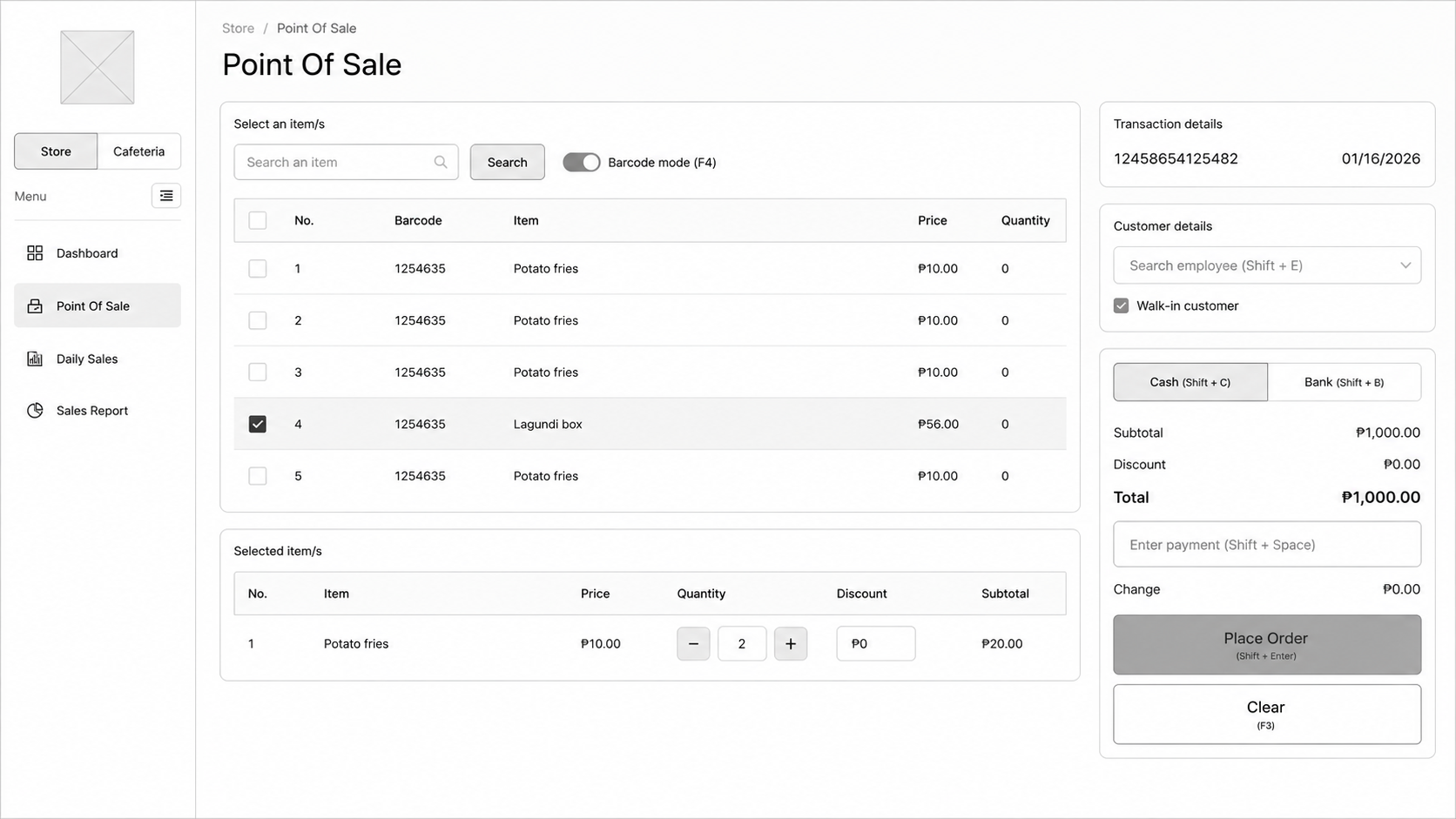
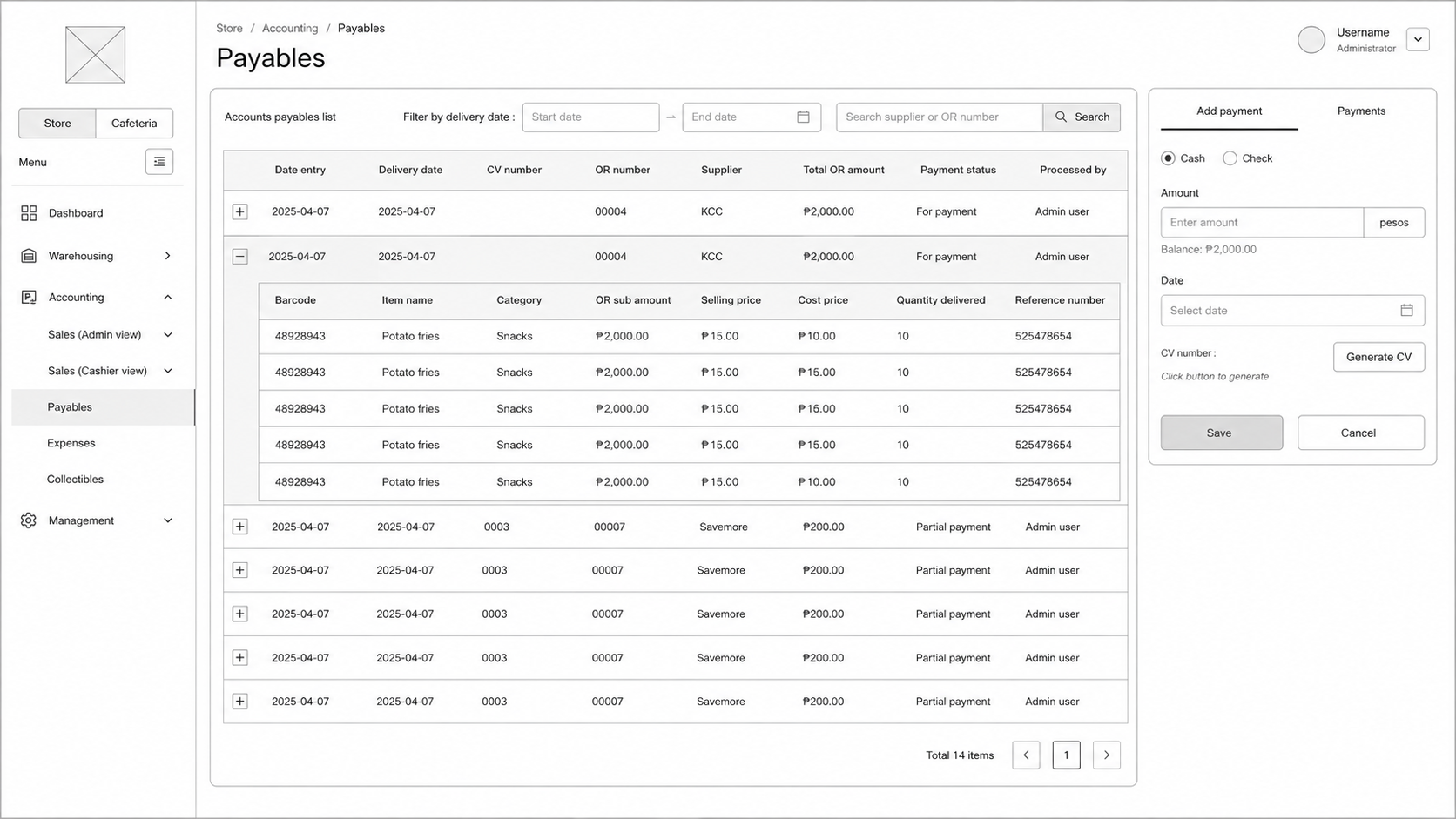
- Designed workflows for sales, inventory, accounting, warehousing, and fund tracking
- Planned database structures and API behavior for operational modules
- Worked on permission handling and role-based access patterns
- Supported reporting and financial visibility features
- Connected inventory movement with the workflows that depend on it
- Documented implementation plans and technical decisions
- Organized complex business requirements into clear system modules
Project visuals
Operational workflows in the platform
04 / Technical decisions
Designing for traceable operations
Workflow-based modules
Reason: A single oversized POS surface would make unrelated operational responsibilities difficult to reason about.
Result: Sales, inventory, accounting, warehousing, funds, and reporting could evolve as clear but connected areas.
Permission-aware actions
Reason: Operational and financial workflows require access appropriate to each responsibility.
Result: Role-based patterns became part of workflow planning rather than an afterthought.
Reporting from consistent data
Reason: Reports are only useful when the underlying sales, inventory, and fund records follow consistent rules.
Result: Reporting requirements informed database and API planning across the platform.
05 / Challenge
Balancing operational depth with usability.
The central challenge was translating detailed business operations into software without making the system unnecessarily complicated. Financial and inventory data needed to remain consistent, traceable, and practical to report.
06 / Outcome
A clearer foundation for operations and expansion.
The work produced a structured operations-platform plan covering core POS workflows, database design, API behavior, permissions, reporting, and fund tracking. It gave the business a clearer foundation for managing operations and extending the system.
07 / Skills demonstrated
Capabilities used
- Backend Architecture
- REST APIs
- Database Design
- PostgreSQL
- Business Workflows
- RBAC
- Reporting
- Technical Documentation